When desire was a sin and even love had to answer to God
Imagine a world where every kiss was counted, every touch scrutinized, and every moan risked damnation. Welcome to the Middle Ages — an era when passion came with a price, and even the most intimate moments had to bow before the Church.
Sex was never meant for pleasure, or so they claimed. It was for duty, for creation, for the continuation of God’s plan. Anything beyond that — a sigh too long, a touch too daring — could send your soul spiraling toward eternal fire. And yet, behind monastery walls and candlelit chambers, desire still burned.
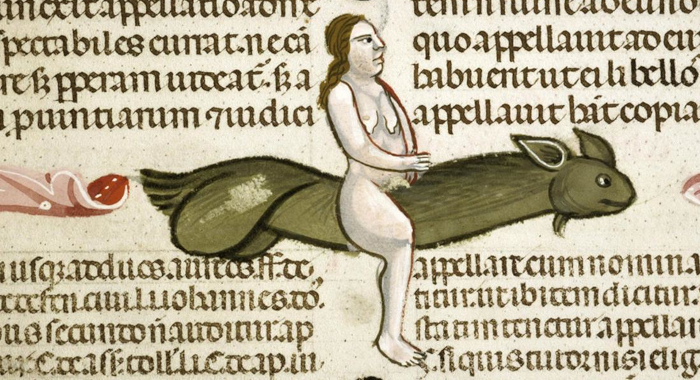
The Rules of Sin
In medieval Europe, the Church ruled the body as much as the soul. Extramarital sex was, of course, strictly forbidden — and could, in some cases, lead to death. But even married couples weren’t safe from moral scrutiny. The Church believed that sex driven by passion rather than duty was a sin. Husbands were warned not to see their wives as women of desire, but simply as vessels for reproduction.
Breaking the rules didn’t just risk spiritual punishment — it could lead to real-world consequences. Confession and prayer were required penance, but repeat offenders might be sentenced to weeks of eating only bread and water. Some were even told that if they conceived a child in sin, the baby would be born deformed as divine retribution.
Forbidden Days, Forbidden Desires
If you thought your modern schedule was busy, try being a married couple in the Middle Ages. Wednesday, Friday, and Sunday were off-limits for sex — as were most Saturdays. Add to that religious holidays, saints’ days, Lent, and Advent, and you were left with roughly 100 “permitted” days a year for intimacy.
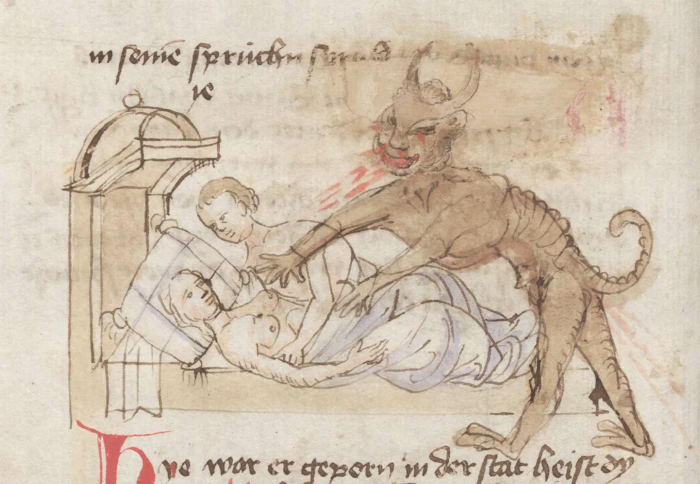
And then came the positions.
Only one was deemed acceptable: the missionary — face to face, orderly, and blessed by modesty. Anything more imaginative, anything born of raw desire, was branded sinful. The “doggy style” position was considered especially wicked, a scandalous imitation of the animal kingdom.
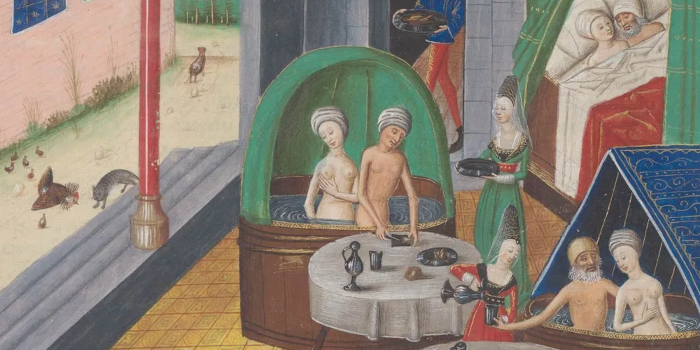
Couples were also expected to avoid undressing completely, keep the lights out, and never touch each other in daylight. Bathing together, kissing passionately, or engaging in oral or anal sex was condemned as perverse and shameful — sins to carry for a lifetime. And of course, masturbation was considered a grave offense.
But love, as always, found a way. When privacy was impossible at home, couples slipped away to hidden meadows or, in delicious irony, into the shadowy corners of churches to taste the sin they were forbidden to name.
The Church, Prostitutes, and the “Impotence Committee”
Despite the Church’s strict teachings, brothels were an open secret across Europe. Clergy often turned a blind eye to them, reasoning that it was better to contain vice than to let it spread unchecked. Inside these houses, anonymity was sacred — whatever happened there stayed there.
Street prostitution, however, was harshly punished. Women caught selling sex in public could be imprisoned, tortured, or even mutilated.
Then there was the strange case of the “impotence inquest.” If a husband couldn’t fulfill his marital duties, the Church convened a group of wise women — a kind of medieval sex tribunal — to examine his body and determine the cause. If they decided his condition was permanent, the marriage could be annulled.
The Secret Life Beneath the Halo
Of course, not everyone obeyed. Archaeologists have uncovered what could only be described as early sex toys and primitive condoms — proof that even under the watchful eyes of priests and saints, human desire refused to die.
The Church may have preached purity, but the heart — and the body — had other plans. And though the guilt was real, so was the pleasure.
By the 15th century, the iron grip of these restrictions began to loosen, and the whispers of forbidden ecstasy gave way to the first breaths of freedom. The medieval world may have feared desire — but it never truly conquered it.